
Brain Balance Research for Utah Families, in Plain Language
Parents in South Jordan and Utah Valley often ask us: is there real research behind this? There is, and you deserve to see it clearly, including what it doesn't show yet.
Brain Balance has published eight peer-reviewed studies since 2020 across seven academic journals. Most use pre-post or retrospective designs rather than randomized controlled trials, and Brain Balance says larger, controlled studies are needed. Here are the two studies families ask about most.

Is Brain Balance backed by research?
Yes, with honest limits. Researchers at Harvard Medical School's McLean Hospital found significant drops in ADHD ratings in 16 children who completed 15 weeks of Brain Balance and Interactive Metronome exercises (Psychiatry Research, 2023). A study using Cambridge Brain Sciences tests found that 478 children and teens improved on all cognitive tests measured after 3 months (2021). Neither was a randomized controlled trial. Individual results may vary.
Harvard Medical School / McLean Hospital ADHD study (2023)
- Who ran it
- Researchers in McLean Hospital's Developmental Biopsychiatry Research Program and the Department of Psychiatry at Harvard Medical School, led by Martin H. Teicher, MD, PhD.
- Who took part
- 16 children and teens with ADHD, ages 8 to 14 (average age about 11), who completed the program, compared with 8 typically developing children.
- What they did
- 15 weeks of Brain Balance exercises combined with Interactive Metronome training.
- What they found
- ADHD ratings dropped significantly. 8.3 points on the Conners' Parent Rating Scale-Revised and 8.2 points on the ADHD Rating Scale-IV. Children with more severe symptoms at the start tended to improve more. Brain Balance's study summary reports the gains were maintained at a 7-month follow-up.
- What it doesn't show
- It was an open, exploratory study with no placebo group, and 59% of the 39 enrolled children with ADHD dropped out. The program was not associated with improvement on one measure, the Quotient ADHD System. The authors say a randomized controlled trial is required for proof of efficacy.
Teicher MH, Bolger E, Hafezi P, et al. Psychiatry Research. 2023;319:114973.
Read the studyPubMed abstractCambridge Brain Sciences cognitive study (2021)
- Who ran it
- Dr. Rebecca Jackson of Brain Balance and Dr. Conor J. Wild of Cambridge Brain Sciences (now Creyos Health), an independent cognitive testing platform used in hundreds of published studies.
- Who took part
- 478 children and teens ages 4 to 18 who completed 3 months of the program (three 1-hour sessions per week), compared with a control group that had enrolled but done an average of only 27 days.
- What they found
- The Brain Balance group improved on all cognitive tests measured: 12 tests for ages 7 and up, 3 for ages 4 to 6. The control group improved on only one test. The biggest gains were in memory, reasoning, verbal ability and concentration, on tests the children never practiced in the program.
- What it doesn't show
- Participants weren't randomly assigned, the control group also had some program time, diagnoses weren't available, and there was no follow-up to see whether gains lasted.
Jackson R, Wild CJ. Journal of Advances in Medicine and Medical Research. 2021;33(6):27-41.
Read the studyOther published Brain Balance studies
- ADHD symptoms on the Brown ADD Scales — 71 children and teens; 81% improved after 3 months and 49.3% reached clinically reliable change. Humanities and Social Sciences Communications, 2022. Read more
- Developmental outcomes by baseline severity — 4,041 children and teens; large to very large effect sizes across six developmental domains after 3 months. Frontiers in Psychology, 2023. Read more
- Anxiety and emotional functioning — Four years of parent surveys; 75% of children showed up to 25% improvement after 5 to 6 months. Journal of Mental Health and Clinical Psychology, 2020. Read more
- Attention and classroom behavior at school — School-based pilot, ages 5 to 15; teacher-rated attention improved compared with controls. Journal for the Study of Education and Development, 2023. Read more
- The at-home program — 310 children in the at-home program improved on attention, response inhibition and short-term memory tasks compared with controls, similar to in-center gains. Frontiers in Child and Adolescent Psychiatry, 2024. Read more
How the Brain Balance journey works
From your very first phone call to celebrating milestones, here is what you and your child can expect.
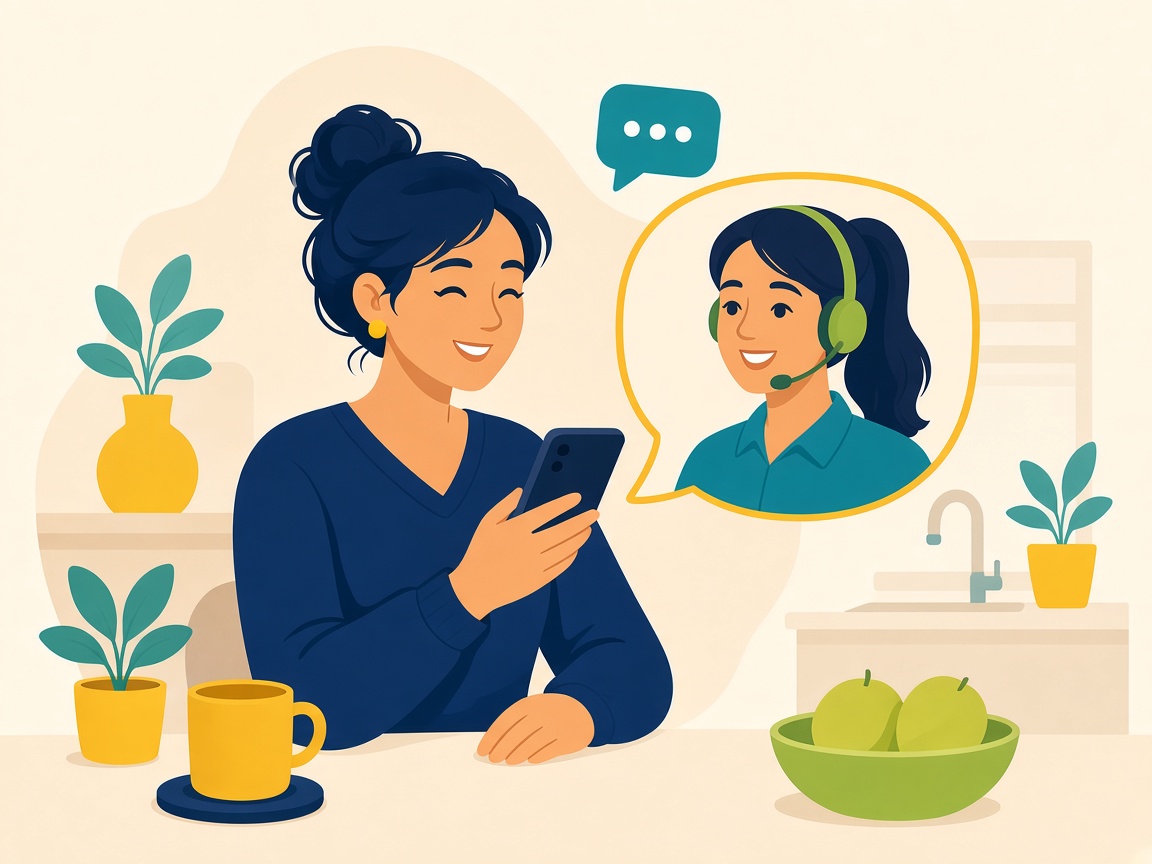
Talk with our team
Fill out the form or call. A team member from your Utah center will reach out to personally discuss your child's challenges.
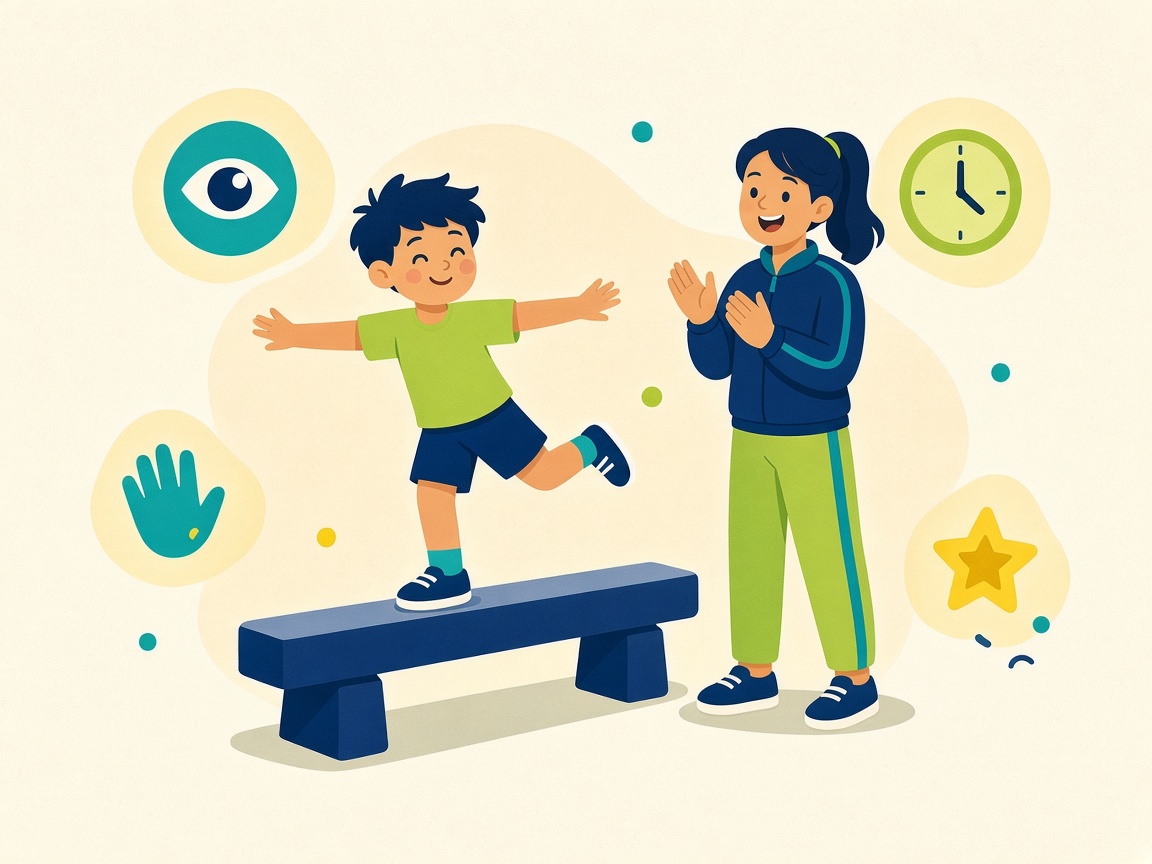
The Assessment (about 2 hours)
Sensory, motor and cognitive activities across six brain domains. It's engaging, and kids often think it's fun.
Your results, explained
A Brain Balance specialist walks you through the results in plain language: where your child is, what the gaps are, and why the struggles you see are connected.

Your personalized plan
If Brain Balance is right for your family, we'll build a program around your child's profile. If it isn't, we'll tell you that too.
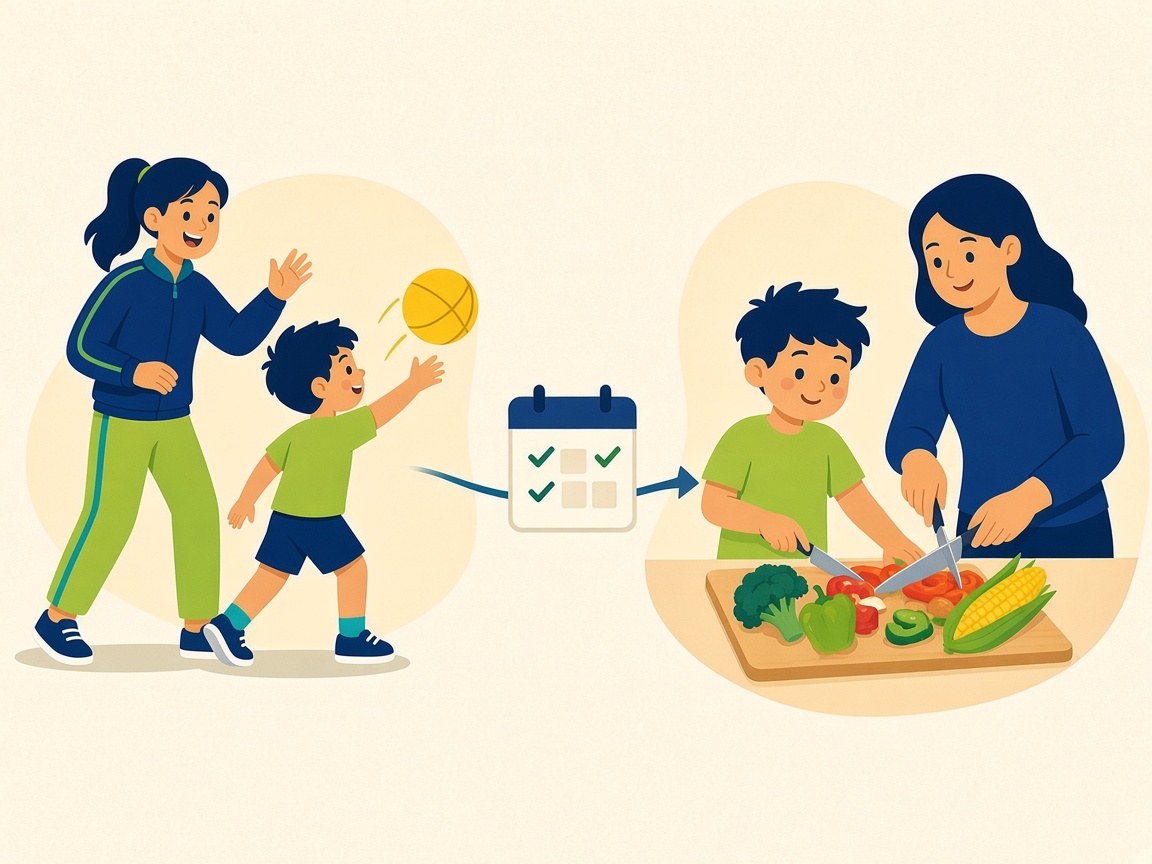
Coaching + at-home routine
In-center sessions with our coaches three times per week (or a parent-led at-home virtual option with weekly video check-ins), plus 1:1 nutrition coaching.
Questions parents ask
No. It was designed and conducted by researchers at McLean Hospital and Harvard Medical School. Brain Balance provided program access.
No study can promise that. Individual results may vary. The assessment shows where your child is today, and our team will tell you honestly whether Brain Balance is a fit.
Brain Balance does not prescribe or recommend medication and does not require anyone to stop it. Medication decisions belong with your physician. Many students complete the program while taking medication.
Each study above links to the published paper through its DOI. Brain Balance also posts summaries, including limitations, on brainbalancecenters.com.
Brain Balance reports eight peer-reviewed studies published since 2020 across seven academic journals.
Funding options
Every child's program is tailored after the assessment. Here is how Utah families fund their care.
UEFA Funds Accepted
Utah Fits All (UEFA) scholarship funds are gladly accepted at both our Orem and South Jordan centers.
HSA / FSA Commonly Used
Many Utah families utilize Health Savings Accounts or Flexible Spending Accounts to cover assessment and program costs.
Flexible Payment Plans
We offer structured monthly payment schedules and financing options to make program investments manageable.
Non-Medical Program
Brain Balance is not covered by health insurance as we are a non-medical, drug-free developmental program.
South Jordan & Utah Valley (Orem)
Our centers are warm, inviting, sensory-friendly environments designed specifically for children and families.
Brain Balance® Utah Valley
Orem, Provo, Lehi, American Fork, Pleasant Grove, Lindon
Brain Balance® South Jordan
South Jordan, West Jordan, Riverton, Herriman, Sandy, Draper
Schedule your discovery call
Tell us a little about your child and we'll reach out to set up your discovery call.
More ways we help
A drug-free ADHD program for kids and teens in South Jordan & Orem. Our 2-hour assessment looks at attention,…
Learn more →
Bright but distracted or disorganized? Our drug-free program looks at attention, memory and executive…
Learn more →
Worry, separation anxiety or OCD tendencies? Our drug-free, non-medical program looks at how the brain…
Learn more →
Defiance, outbursts or meltdowns? Our drug-free, non-medical program looks at the brain development beneath…
Learn more →
Big emotions, outbursts and slow recovery? Our drug-free, non-medical program strengthens the brain…
Learn more →
Brain Balance is a non-medical program and does not diagnose or treat any disorder. It does not prescribe medication and can work alongside your physician's treatment plan. Individual results may vary.